Numan’s Journey: How Alcohol Addiction Treatment in Rawalpindi Gave a Family their Life Back
In my years of practice, I have learned that most patients do not walk into my clinic at their lowest moment. They walk in at the moment someone they love refuses to look away.
Numan was one of those patients. He sat in my consultation room with his wife beside him, unable to meet my eyes. “Doctor,” he said, “I think I’ve ruined everything.”
I told him what I tell every patient: alcohol dependence is a medical condition, not a moral failure, and it can be treated.
Over the following months, I watched Numan go through supervised detox, counseling, and family therapy at Malik Medical Center, our drug and alcohol healing center serving Rawalpindi and Islamabad. He has allowed me to share his story so that other families may recognize themselves in it. His name and some details have been changed, but his journey reflects the path many people take through alcohol addiction treatment in Rawalpindi. If you are searching for help tonight, I hope his story shows you that recovery is closer than you think.
The Man Who Could “Stop Any Time”
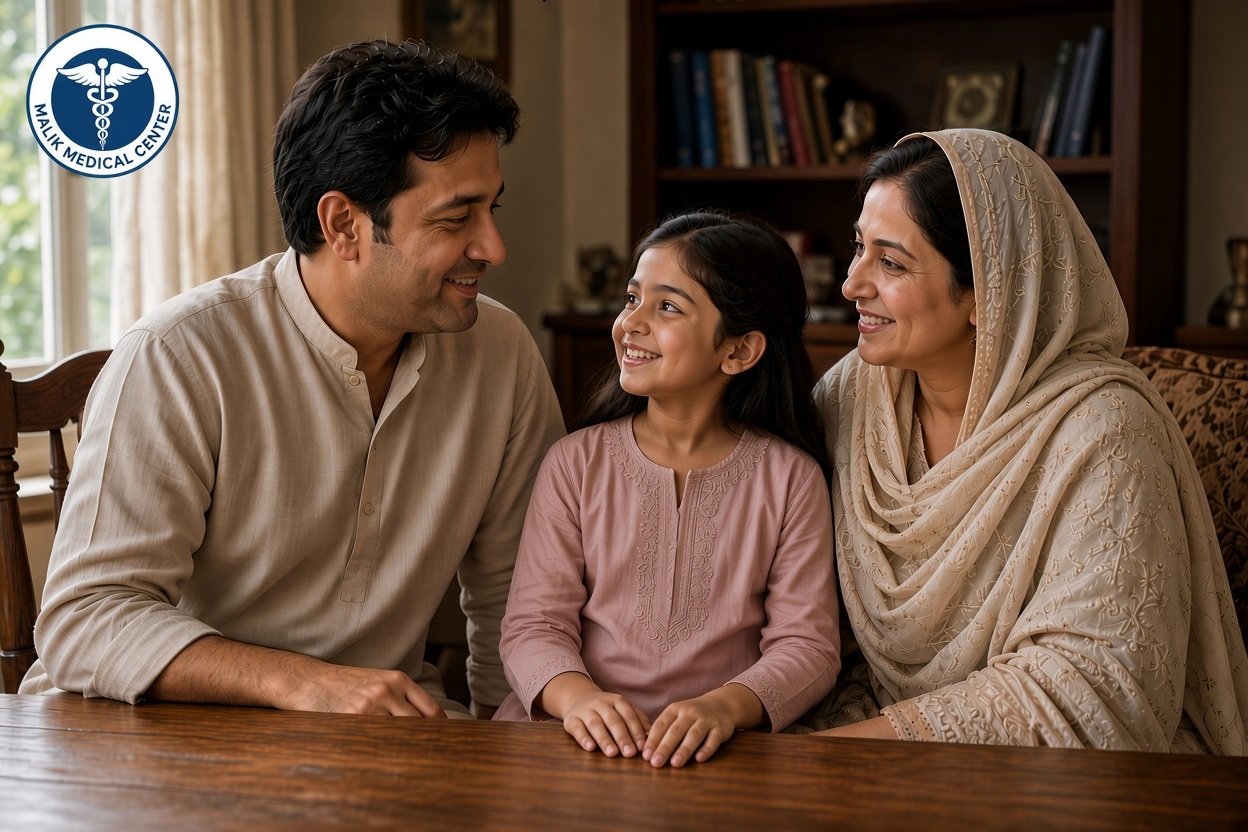
Numan was 38, a manager at a company in Rawalpindi, married to Sana, and the father of two children. Like many people, he started drinking socially, a glass to unwind after a stressful week. Over about ten years, one glass became several, and weekends became weekdays. Bottles appeared in the garage. Excuses came easily.
Sana noticed first. There were mood swings, a short temper, missed dinners, and mornings when his hands shook as he reached for his tea. “I can stop whenever I want,” he told her. He tried three times in two years. Each attempt lasted four or five days. Then the sweating, the pounding heart, and the sleepless nights pulled him back to the bottle.
What Numan did not know, and what many patients do not know, is that suddenly stopping after years of heavy drinking can be dangerous. He was not weak. His body had become dependent, and willpower alone could not undo that.
The Night That Brought Him to Us
After his third failed attempt, Numan woke at 2 a.m. drenched in sweat, trembling, his heart racing. He stumbled to the kitchen for water and collapsed.
It was his nine-year-old daughter, Zara, who found him. “Baba, wake up,” she kept whispering, shaking his shoulder with small, frightened hands.
Sana rushed him to the hospital, where he was treated for a serious withdrawal reaction and advised to seek supervised care. The next morning, she sat at the kitchen table and typed the searches so many families type in the dark: alcohol addiction treatment Rawalpindi, alcohol de-addiction centre Pakistan, alcohol rehab Islamabad. Because the two cities sit side by side, families often compare options across both before deciding.
She found us and booked a psychiatrist appointment in Rawalpindi for that same week. Numan told me later that he almost cancelled twice. Shame is a heavy thing. He feared being judged and labelled.
The First Consultation
I do not begin with a lecture. In that first psychiatric consultation, I asked about his drinking history, his sleep, his health, his work, and his family. I asked about his mood, too, because alcohol dependence often travels with anxiety or depression, and treating one without the other rarely works.
This is how effective psychiatric treatment in Rawalpindi begins: with listening and a careful assessment of the whole person, not just the habit. Whether a family is looking for a psychiatric consultation in Islamabad or a specialist closer to home, that first honest conversation shapes everything that follows.
By the end of the hour, Numan had something he had not had in a long time: a clear plan.
Medical Detox: Safe, Supervised, and Human
For Numan, the first stage of alcohol dependence treatment in Rawalpindi was medical detox. Given his earlier withdrawal reaction, quitting at home was no longer an option.
Our doctors and nurses monitored his vital signs around the clock. Medication was used where needed to ease symptoms and prevent complications. The shaking, nausea, and restless nights still came, but he was not alone for any of them.
On his third night, he told me, he felt as if his skin was crawling. One of our nurses sat beside him and said, “This will pass, and we’re right here.” She stayed until morning.
Detox is not the cure. It is stabilization, clearing the body so that the mind can begin to heal. After about a week, Numan woke up without the fog he had lived in for years, and he could think clearly enough to start the real work.
Counseling: Finding the “Why”
Stopping drinking is one thing. Understanding why you started is another. In individual counseling, Numan began using Cognitive Behavioral Therapy to notice the thoughts that led to his drinking and replace them with healthier responses.
Slowly, a deeper story emerged. Numan’s father had died six years earlier. He had returned to work within days, determined to “be strong” for his family, and never allowed himself to grieve. The evening drink had started as a way to quiet the ache. Over time, it became the only thing that did.
I remember the session when he finally said it aloud. “I never cried for him,” he said. I told him, “You don’t have to carry this alone anymore.” For the first time since the funeral, Numan wept, and I have rarely seen a patient look so relieved afterward.
Group therapy surprised him most. He had expected to feel like an outsider. Instead, a man twice his age said, “I thought I was the only one who hid bottles from my own children.” The room went quiet, then several people nodded. Shame lost its grip that afternoon.
Healing the Family Together
Addiction rarely harms only one person. Sana had spent years covering for Numan, making excuses to relatives, and lying awake waiting for his car in the driveway. Zara had learned to tiptoe around her father’s moods.
Family counseling gave them a safe space to speak honestly. Sana learned that supporting Numan did not mean shielding him from consequences, and that she was allowed to set healthy boundaries. Numan apologized to her, not with excuses, but with plain honesty about the pain he had caused.
In one session, Zara handed her father a drawing: a small house, three figures holding hands, and a sun at the top of the page. “I drew it when you were away,” she said quietly. Numan held it for a long time before he could speak. Even after all these years, moments like that remind me why I do this work.
Rebuilding Daily Life
Recovery also meant practical change. The program included nutrition guidance, since long-term drinking often leaves the body depleted, along with regular sleep routines, light exercise, and stress management. Numan took up evening walks, something he now does with Zara.
He also worked with our team on life skills: handling stress at work without alcohol, recognizing his personal triggers, saying no at social events, and planning for difficult moments. Recovery, I tell my patients, is built from small, repeatable habits, not grand gestures.
Aftercare: Because Recovery Doesn’t End at Discharge
When Numan completed his program, he left with a relapse prevention plan, scheduled follow-up counseling, and ongoing support. This is what separates lasting recovery from a temporary pause. Any trusted alcohol de-addiction centre in Pakistan should treat aftercare as seriously as the first weeks of treatment.
His plan was tested in the fourth month. After a stressful week at work, he found himself standing outside a shop, staring at the door. He did not go in. He called his counselor from the parking lot, and after twenty minutes of talking, the craving passed.
“Relapse prevention isn’t about being perfect,” he told me at his next visit. “It’s about knowing what to do in the moment, and who to call.”
Numan Today
Numan has now been sober for more than a year. He is back at work, trusted again by his colleagues. Evenings are spent at the dinner table, and Sana no longer lies awake listening for the car. Zara’s drawing is framed on his desk.
At his last follow-up, he said something I have not forgotten: “I used to think asking for help meant I had failed. Now I know it was the bravest thing I ever did.”
When to Seek Help
If you recognize yourself or someone you love in Numan’s story, consider reaching out when you notice:
- Drinking daily or in amounts that keep increasing
- Hiding alcohol or lying about how much is consumed
- Failed attempts to cut down or quit
- Shaking, sweating, or nausea when not drinking
- Problems at work, in relationships, or with health
Please do not try to stop heavy drinking on your own, because withdrawal can be dangerous. A psychiatric consultation is a safe first step, and early help improves outcomes.
Frequently Asked Questions
Is alcohol addiction treatment in Rawalpindi confidential?
Reputable centres treat patient privacy seriously. You can ask about confidentiality when you book your first appointment.
Do I need medical detox?
For moderate to severe dependence, supervised detox is strongly recommended because withdrawal can cause serious complications.
Can my family be involved?
Yes. Family counseling is often an important part of recovery.
How long does treatment take?
It varies from a few weeks to several months, followed by ongoing aftercare.
If you are ready to take the first step, book a psychiatrist appointment in Rawalpindi at Malik Medical Center and begin your own story of recovery.