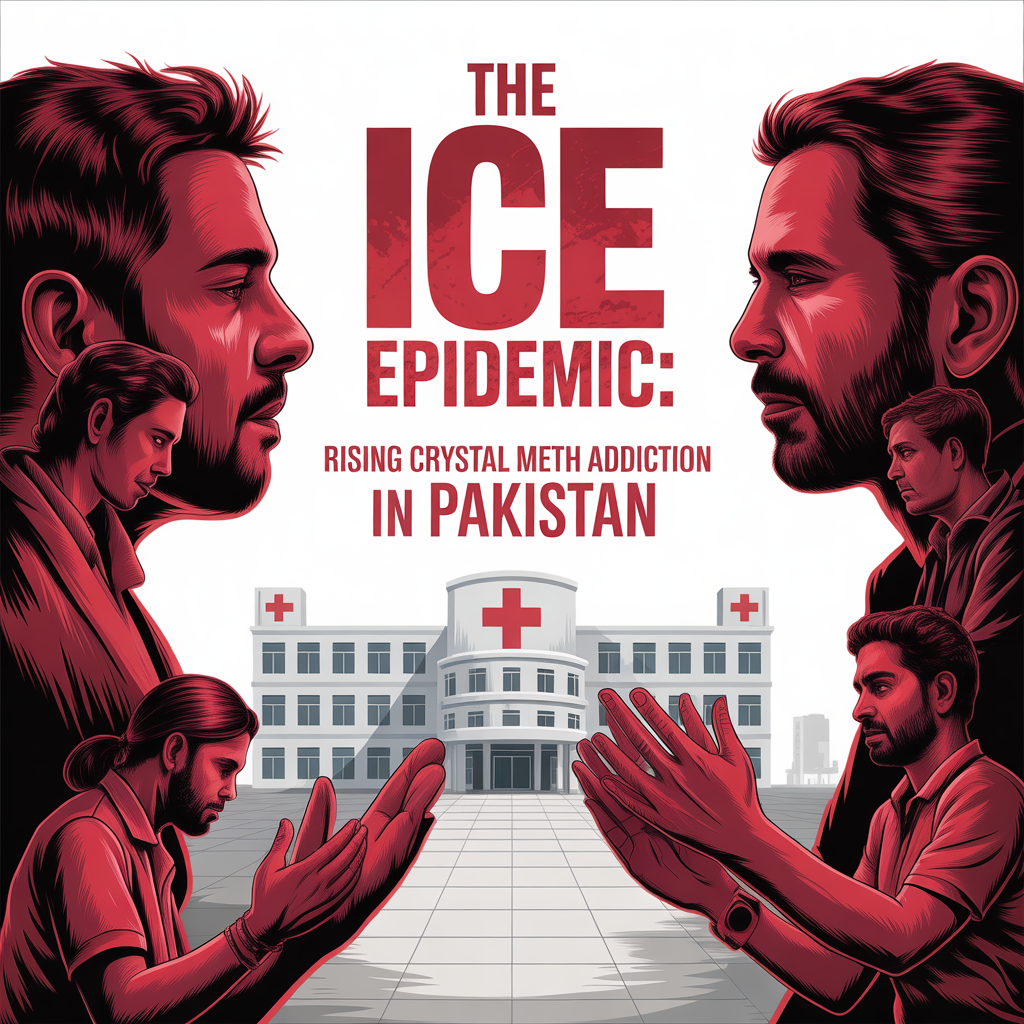
The Ice Epidemic: Rising Crystal Meth Addiction in Pakistan
In recent years, Pakistan has been facing a new and dangerous challenge — the spread of crystal meth, commonly known as “ice.” This highly addictive drug has quietly entered cities, towns, and even rural areas, affecting young people, students, and professionals alike. What started as a hidden problem has now grown into a national crisis, tearing apart families and damaging the health and future of many.
What Is Ice and Why It’s So Dangerous
Ice is the street name for crystal methamphetamine, a powerful stimulant that affects the brain and nervous system. It looks like clear crystals or small shards of glass. When people use ice, it gives them a strong feeling of energy, confidence, and alertness. But behind that short burst of excitement lies a dangerous trap.
The drug quickly changes how the brain works. It floods the brain with dopamine, a chemical that makes people feel pleasure and motivation. After a few uses, the brain becomes dependent on it, and users begin to crave the same “high” again and again. This is what leads to addiction — a stage where life starts to revolve around the drug.
How Ice Entered Pakistan
A decade ago, most Pakistanis had never heard of ice. Drugs like heroin and hashish were more common. However, as smuggling routes shifted and synthetic drugs became easier to produce, crystal meth started entering the country from neighboring regions, especially Afghanistan.
Soon, local production also began. Small illegal labs started to appear in different parts of the country, using chemicals imported for industrial use. Because ice can be made in small spaces and doesn’t need large fields like poppy for heroin, it became harder for law enforcement to control.
Universities and hostels were among the first places where it spread quietly. Students, under academic and social pressure, were attracted to the drug because it promised long hours of study and energy without sleep. But what started as “help to stay awake” quickly turned into addiction and destruction.
The Impact on Youth
The youth of Pakistan are particularly at risk. With limited job opportunities, social pressures, and the desire to escape daily struggles, many young people experiment with drugs without realizing the long-term consequences. Ice, in particular, seems attractive because it’s seen as a “modern” or “party” drug — but its effects are far worse than traditional narcotics.
Once addicted, users experience extreme mood swings, aggression, anxiety, and hallucinations. They stop caring about studies, work, and family. Many end up stealing from their homes or friends to afford the next dose. Physical health also collapses — weight loss, tooth decay, and skin sores are common symptoms.
For families, it becomes a nightmare. Parents often notice changes too late, when the addiction has already taken hold. Rehabilitation becomes difficult because ice addiction is one of the hardest to treat. The cravings can last for months or even years after quitting.
Social and Economic Consequences
The Ice Epidemic: Rising Crystal Meth Addiction in Pakistan has deep social and economic effects. On the surface, it may look like an individual issue, but in reality, it touches every layer of society.
Drug addiction increases crime rates. Many addicted individuals, desperate for money, turn to theft or drug dealing. Communities start losing their sense of safety. Hospitals and clinics face more mental health cases, stretching already limited resources.
Economically, the country suffers as well. Young people who should be building careers and contributing to society become dependent and unable to work. Families spend large amounts on treatment and rehabilitation, often selling property or assets to save loved ones. This cycle of loss weakens not only homes but also the national economy.
Government Efforts and Law Enforcement
Authorities in Pakistan have taken steps to address this crisis. The Anti-Narcotics Force (ANF) and police departments conduct raids and awareness campaigns across the country. Several big ice manufacturing labs have been shut down, and many traffickers arrested.
However, the problem is growing faster than the control measures. The demand for ice continues to rise, and new smuggling routes are created all the time. Limited awareness and social stigma make it hard for people to seek help. Many families hide addiction issues out of shame instead of getting early treatment.

The Role of Awareness and Education
To truly fight this epidemic, awareness and education are key. Schools, colleges, and media must play a stronger role in spreading knowledge about the dangers of ice. When young people understand how addictive and harmful this drug is, they are less likely to experiment with it.
Community organizations and religious leaders can also help by talking openly about drug problems instead of ignoring them. Addiction should be treated as a medical issue, not just a moral failure. The more society supports those who want to recover, the better chance Pakistan has to reduce the spread of crystal meth.
Rehabilitation and Hope
Recovery from ice addiction is difficult, but not impossible. Rehabilitation centers across Pakistan are now offering treatment programs that include counseling, medical support, and skill development. Success requires patience, family involvement, and strong community backing.
It is important for people to understand that addicts are not criminals; they are patients who need care and compassion. By helping them rebuild their lives, society can break the cycle of addiction and bring hope to many struggling families.
Looking Ahead
The Ice Epidemic: Rising Crystal Meth Addiction in Pakistan is a warning that must not be ignored. The future of the country’s youth is at risk if immediate steps are not taken. From government action and strict law enforcement to community education and better healthcare, every part of society must work together.
Pakistan has faced many challenges in the past, and it can overcome this one too — but only through unity, awareness, and compassion. Each person, whether a teacher, parent, or policymaker, has a role to play in protecting the next generation from the dangers of crystal meth.
Conclusion
The rise of crystal meth use in Pakistan is more than just a drug problem; it’s a social and emotional crisis. The Ice Epidemic: Rising Crystal Meth Addiction in Pakistan continues to spread silently, but with awareness, education, and support, it can be stopped. It’s time to talk about it openly, to reach out to those in need, and to build a healthier, drug-free future for all
FAQs
People often ask what crystal meth, or “ice,” really is and why it has become so common in Pakistan. Many wonder how it affects the brain, what symptoms show someone might be addicted, and whether recovery is possible. Others question how ice enters the country, who is most at risk, and what the government is doing to stop its spread. Families also seek to know where to find help, how rehabilitation works, and how they can support a loved one without judgment or stigma.